
Slow and steady wins the race! Long-term resource planning is the key to a stable business that stands the test of time.

How “long-term” should long-term planning be? How far ahead should we look?
The answer depends on the business. But for most teams, it’s not as abstract as it sounds.
Some organizations keep it cautious, looking five or ten years into the future. On the other end of the scale, you've got companies like IKEA, which plans a whopping 200 years ahead.
While planning for the next couple of centuries is extreme (who knows what changes are on the horizon in the next decade, let alone the next century), for effective resource planning and a staffing strategy that truly supports your business goals, a long-term perspective is paramount.
But that's not to say that we should be overly wary. There's a place in long-term planning for strategy, ambition, and a little optimism.
In this article, we're explaining what long-term planning means in resource management, why it matters so much, and how you should approach it for the best results.
Long-term resource planning is the process of planning your company’s work and people months (typically up to a year) ahead.
Just as short-term planning is essential for day-to-day operations, long-term planning plays a critical role in setting teams up for success. It involves analyzing future projects and evaluating them against your available capacity and skills, so you can make sure teams have the capacity needed to cover demand.
Needless to say, long-term planning can be tricky. Some projects are highly predictable, while others may include unknown or tentative elements or lots of dependencies. Still, planning ahead gives you greater certainty and visibility.
And while it might sound counterintuitive, planning ahead doesn’t mean locking people into fixed work months in advance. That’s a common misconception. Long-term planning is about understanding what will be needed, not creating rigid assignments.
Strong resource management software supports this with placeholders and “what-if” scenario planning. That makes it easier to map where your plans need to be, test different hiring paths, and adapt as your pipeline changes. More on that in a moment.
Read more: The Short-Term & Long-Term Objectives of Resource Management Explained➡️
Going without long-term resource planning is a risky choice. Here’s why.
Long-term planning gives you the chance to zoom out and look at the bigger picture to understand what it will take for the company to hit its goals. And from this perspective, you can also see where your project may run into potential risks and constraints.
On top of that, long-term resource capacity planning and resource allocation help you uncover gaps in availability and skills. When you can see which skill sets will be in demand months ahead, you can start hiring strategically, instead of scrambling at the last minute for limited talent.
Long-term resource planning also plays a big role in financial predictability. When you can see future capacity and demand clearly, it becomes much easier to forecast revenue, plan utilization, and protect project margins.
Without that visibility, teams often commit to work they don’t actually have the capacity to deliver, or leave people underutilized because demand wasn’t modeled accurately. Over time, both scenarios eat into profitability and make financial planning far more reactive than it needs to be.
For most project-based teams, long-term planning typically means looking six to twelve months ahead.
That window is far enough out to spot skill gaps, hiring needs, and delivery risks, but close enough that assumptions are still useful. Beyond a year, plans naturally become more directional than precise.
The goal isn’t to predict exact assignments months in advance, but to understand future demand, test scenarios, and make informed decisions as early as possible.
Long-term planning is crucial when you:
The short answer: things break. Failing to plan can lead to under or overutilized people, missed hiring windows, and margin shocks.
Read more: Overutilization: Know the Dangers of Overworking Your Team ➡️
Ready to get started? Here are the key practices to focus on.
Before we go into the tricks of the trade, there is one thing to make clear: doing complex long-term resource planning in Excel is not sustainable.
That doesn’t mean spreadsheets are useless – many teams start there. But as soon as you’re planning resources for multiple projects, with tons of deadlines, dependencies, and variables, the cracks start to show.
➡️ We’ve prepared a guide to scaling resource planning beyond spreadsheets here ⚡
Starting with a good resource management tool is, therefore, a must.
A tool like Runn gives you the ability to plan people across portfolios of projects a year or more in advance. This way, you can build a picture of how your resource pool aligns with the projects you have in the pipeline — helping you anticipate risks, uncover gaps, and create a streamlined process for requesting additional resources to fill those gaps.
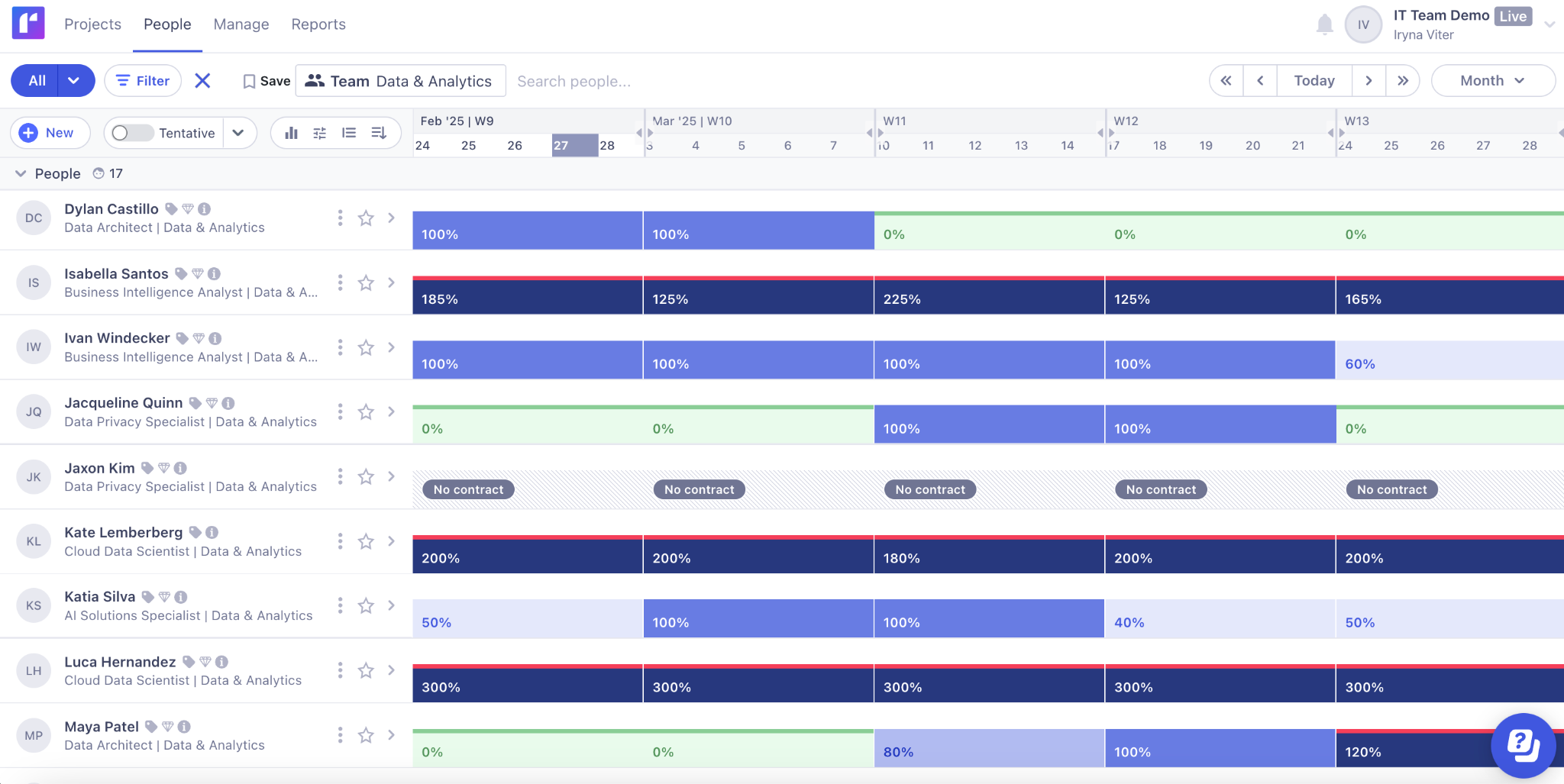
We’ve rounded up the best resource planning software here ➡️
It's important to draw a clear line between short-term resource planning and long-term resource planning:
Long-term resource planning efforts need to be directed at identifying prospects and vulnerabilities without getting too bogged down in the details of every project.
For example, imagine you’re planning for the year ahead and expect two large client projects to kick off in the next six months. On paper, your overall capacity looks fine. But when you zoom out, you realize both projects depend heavily on the same specialist skills.
Without long-term planning, that clash might only surface when delivery is already underway. With a long-term view, you can spot the risk early, model different scenarios, and decide whether to hire, upskill, or adjust timelines before it turns into a delivery or margin problem.
On top of that, there's also the question of frequency and time investment required. Long-term planning is one of those exercises you do only a few times per year by leveraging all the data gathered over a long period of time. Resource managers need to consider what is possible, what isn't, and what needs to be done or adjusted.
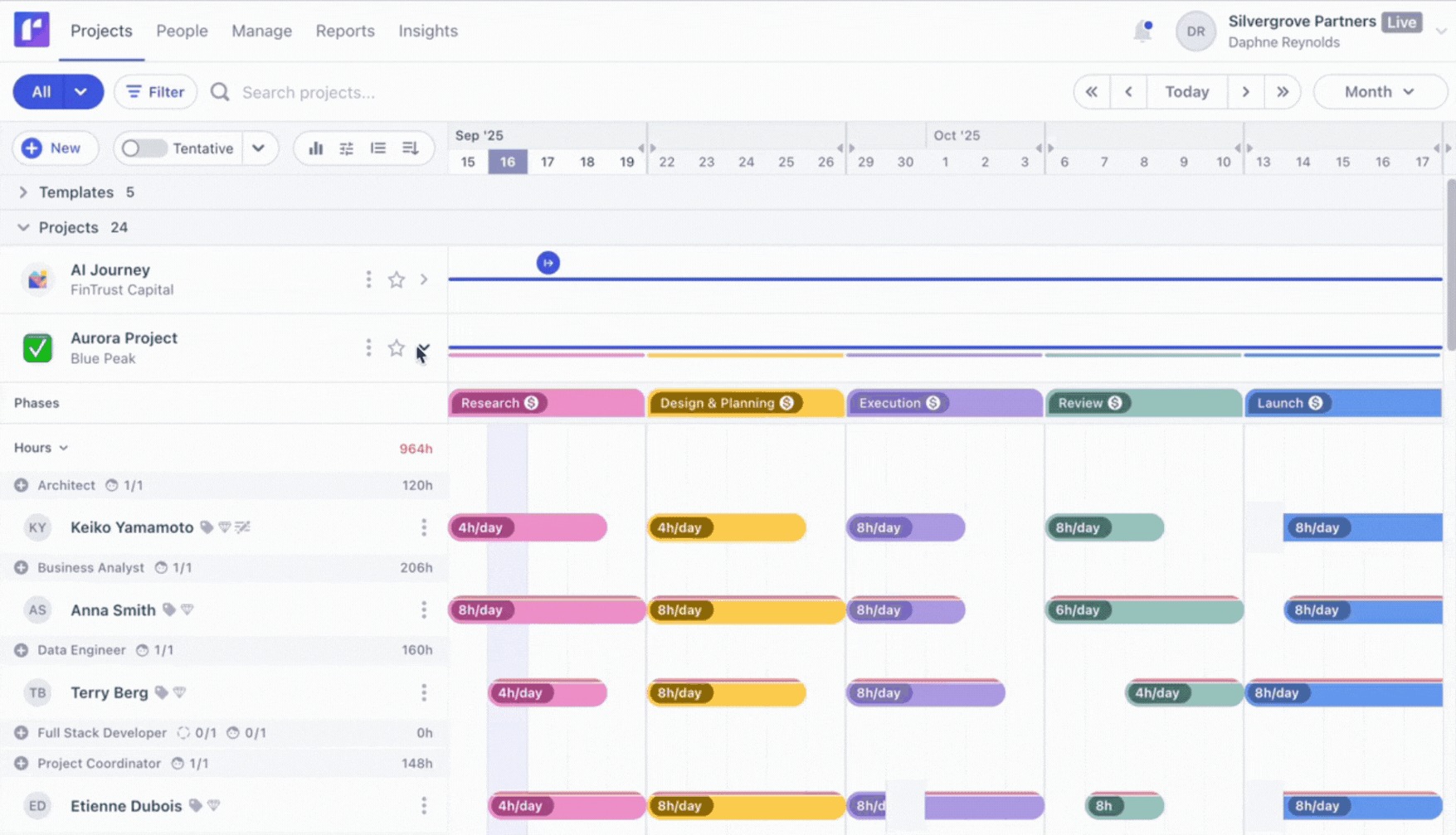
The best resource management tools can help you create a resource plan for tentative projects in your long-term resource planning.
Also known as "what-if" planning, scenario planning shows you how the overall picture will change if certain variables change. For example, if you add or remove specific projects, if your resource pool changes, or if timelines shift. Being able to model the impact of tentative projects is great for when you’re planning around work that isn’t sold yet.
For long-term planning, scenario planning is invaluable. It helps you make the most of potential opportunities and find spots where your team is falling short. It will also help you prevent too much employee bench time and signal if your current resource potential does not meet company demands or expectations for the coming year.
Planning for a whole year ahead can be difficult. There are always gaps to fill, and it leaves room for wishful thinking. For example, if you take on a project that has little alignment with your current capabilities, hoping that the resource pool will catch up, it could backfire.
After all, it's easy to misjudge the extent and range of skills required to tackle certain work, or to underestimate the time it takes to find and hire people with the right mix of skills.
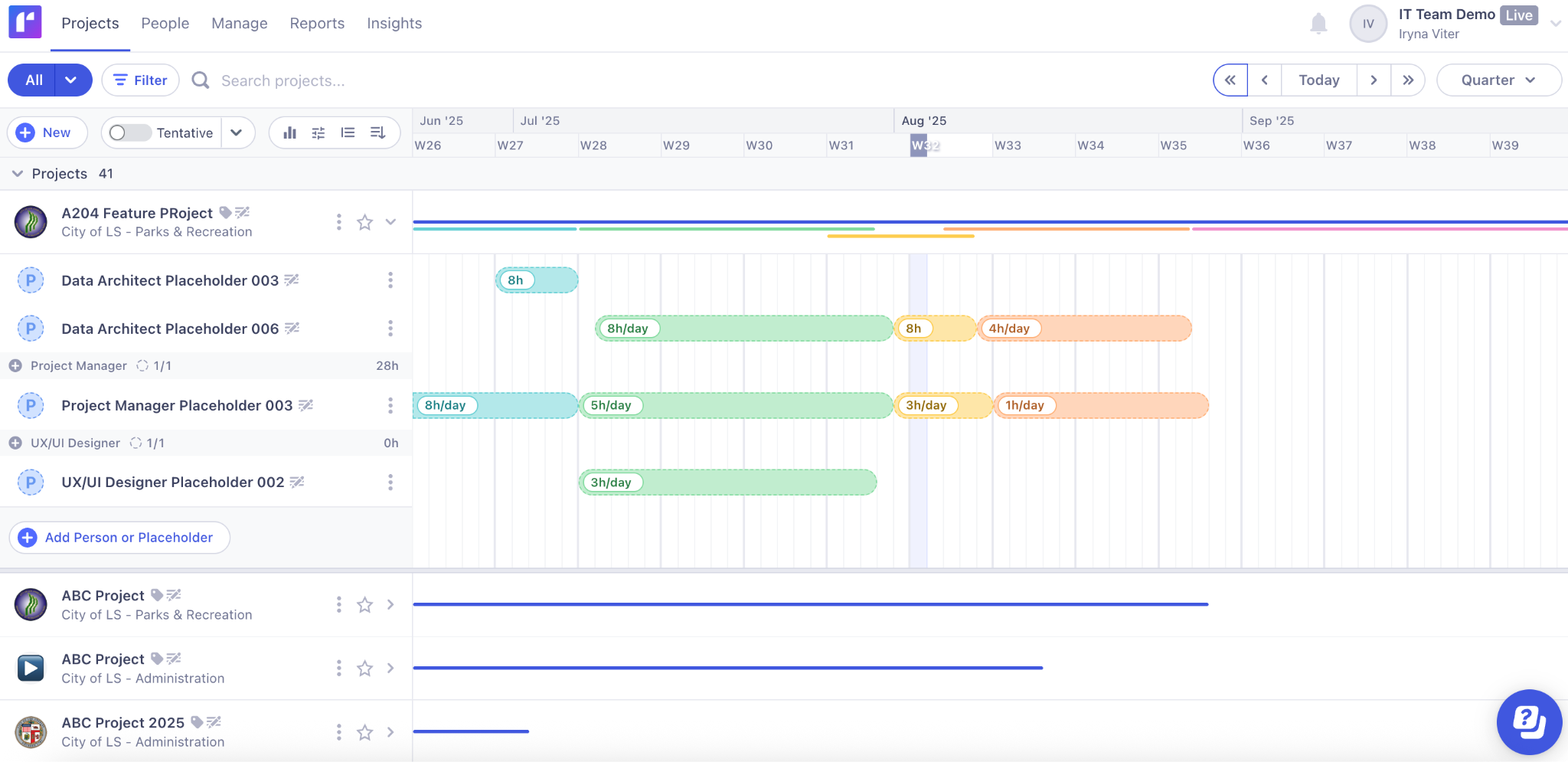
There is a simple solution, though. With tools like Runn, you can easily use placeholders for demand planning in your project management. Placeholders help you pinpoint precisely what skills and expertise your resource pool is missing, as well as the availability required and the costs it would incur.
This kind of forward-looking planning is also one of the most effective ways to surface skill gaps early before they turn into delivery or hiring emergencies.
Runn also supplies you with a resource planning template for different types of projects, so creating a resource plan has never been easier.
Continue reading: How to Do a Resource Gap Analysis ➡️
As a general rule, you should never book 100% of your people's time with billable work.
Any resource planning guide will point out that it's important to always keep a little room for admin or non-billable work, unexpected leave, vacations, and even just changes in priorities.
A person’s ideal utilization rate will depend on a number of factors, such as role, seniority, and business model, but 80% is a good benchmark to start with.
There's a delicate balance to be struck here. If you fail to maximize your team's potential, your team will be underutilized, bored, and unmotivated. Get a little too ambitious, and you're looking at an overworked workforce.
And if you spread your people too thin, you might end up expecting too much from what they can actually deliver, which will make your long-term resource planning inaccurate and unreliable.
Wondering which function long-term resource planning should sit with? This will depend on the size of your business, and who owns strategic planning.
Typically, long-term planning is owned by ops or delivery leadership, but they can’t do it on their own. Effective planning requires input from project managers and the sales team, who can provide guidance on the project pipeline and demand, while finance will be interested in seeing your data on forecasting and mapping the impact of hiring decisions.
For more tips, check out our webinar on Forecasting Best Practices for Resource Management:
Many teams start planning with big ambitions, but get discouraged when results don’t appear overnight. They spring out of the gate strong, yet quickly hit roadblocks. If this has happened to you, don’t be put off: you can’t expect perfection on day one.
It’s important to remember that long-term planning isn’t just a process change – it requires a mindset shift, and takes time to implement effectively. As your data hygiene and planning habits improve, so will the effectiveness of your planning.
Implementing long-term resource planning in your organization? These resources can help:


