
Constraints and limitations expose what’s broken. Learn how to optimize teams, projects, and profitability to emerge stronger despite tight budgets.

We hear you: tough times and tight budgets don't exactly spell "opportunity". But sometimes the leanest times give you the sharpest signals.
Resource constraints force clarity. The pressure to make do with less gets you motivated to focus on simplicity and efficacy – really coming to terms with what works and what doesn't.
And teams that optimize under pressure come out stronger, more efficient, and ready to scale when the time is right.
So let's take a look at how to optimize and tighten up the ship under the pressure of budget constraints.
I'm sure we can all feel it as we come into 2026. Last year was an absolutely brutal year for layoffs. Many of us are starting the year with a smaller team, diminished budget, and morale at an all-time low.
Many businesses were already struggling, but now the imperative to do more with less is stronger than ever.
But there is one small silver lining here, even if it doesn't quite feel like it: when everyone’s stretched thin, you can really see what’s not working.
When you're in growth mode, vague scope, over-hiring, and misaligned priorities can bury inefficiencies. But in leaner times you have less slack in the system, which means dysfunctional elements really show themselves.
This makes budget cuts the clearest moment to spot what’s bloated, broken, or misallocated, and fix it.
There’s also built-in urgency for change, making it ideal for getting buy-in for business-critical changes.
Monitoring bench time or the time employees sit idle (say, with pockets of free time between projects) is essential for finding people who can take on more work.
Often, availability isn’t immediately obvious. Tracking utilization helps overcome this.
The opposite is also true: monitoring utilization also lets you identify overworked employees. In turn, this helps you avoid burnout and loss of productivity.
Dig deeper: How to Create a Bench Report in 3 Simple Steps ➡️
The fastest way to get started? Ask employees to track their time and gather the data in a singular resource management tool. It’s only then that you can get a bird’s eye view of how productive each employee is.
In Runn, for instance, you can get a people utilization report that shows you:
The report breaks down both billable employee utilization and non-billable utilization, so you can review the number of hours going into work that brings in revenue versus administration or other non-revenue-generating work.
Dig deeper: How to Build & Read a Utilization Report ➡️
Optimizing utilization isn’t only about making sure everyone works at their optimal capacity. Instead, it involves ensuring individuals work on tasks that they are best equipped to do.
Essentially, when people work on projects aligned with their skills and interests, they’re likely to work more effectively and deliver better results than when working on tasks they spend half their time figuring out or dreading.
Not to mention, this shift in allocating resources leads to reduced time lost to work that often surfaces when the wrong person is staffed on a high-stakes project just because they were free.
In short, think fit first, availability second, when assigning projects by building a skills inventory.
This is a living document capturing all employees’ skillset, experience, seniority level, availability, and education.
Once you have it ready, you can easily filter and find people by their skills for different projects.
.png)
The best part? A skills inventory facilitates cross-team collaboration, letting one team leverage skills from the other team based on employee availability.
In lean times, cutting projects isn’t always the best option. You still need to drive revenue, deliver value, and meet client commitments. The solution? Scope smarter.
You’ll want to scope practically, plan ahead with forward-looking capacity reports, and stack priorities realistically.
To begin with, analyze past project data. Go back to uncover how long tasks and projects actually take. Use the project to inform realistic project planning.
When new projects come in, take the time to scope out the entire project, including deliverables and timelines. Clearly determine what’s in and out of the scope, then document and align with stakeholders before kickoff.
But don’t just stop here. Set project checkpoints to review whether projects are on track and within their defined scope. Also set review moments to evaluate new requests before they’re added or declined, so the scope doesn’t silently expand mid-project.
Don’t forget to prioritize tasks and projects by impact, not urgency. This ensures your lean team brings in revenue despite the reduced headcount. To this end, evaluate projects by their revenue, retention, or critical operations – not just the loudest requests – to prioritize well.
When budgets are squeezed, it’s not enough to deliver projects – you need to deliver them profitably. It’s where focusing on how staffing costs impact project profitability comes into the picture.
Misaligned staff is a leading culprit behind hidden profit loss. And when the cost of project delivery outweighs what the project brings in, you’ve what we call revenue leakage.
The fix? Treat resource planning as a financial lever.
You can do this by tracking actual delivery costs. Review how much time employees typically spend on specific tasks or types of projects.
Use the information to assign projects based on speed (this aligns with allocating resources based on strengths as well) and correctly quoting project rates.
When projects end, use client billing and expected return on investment to compare delivery costs. This allows you to understand how different staffing mixes impact profit margins. For example, if you mix senior talent with juniors on low-value tasks, see how it impacts your profit.
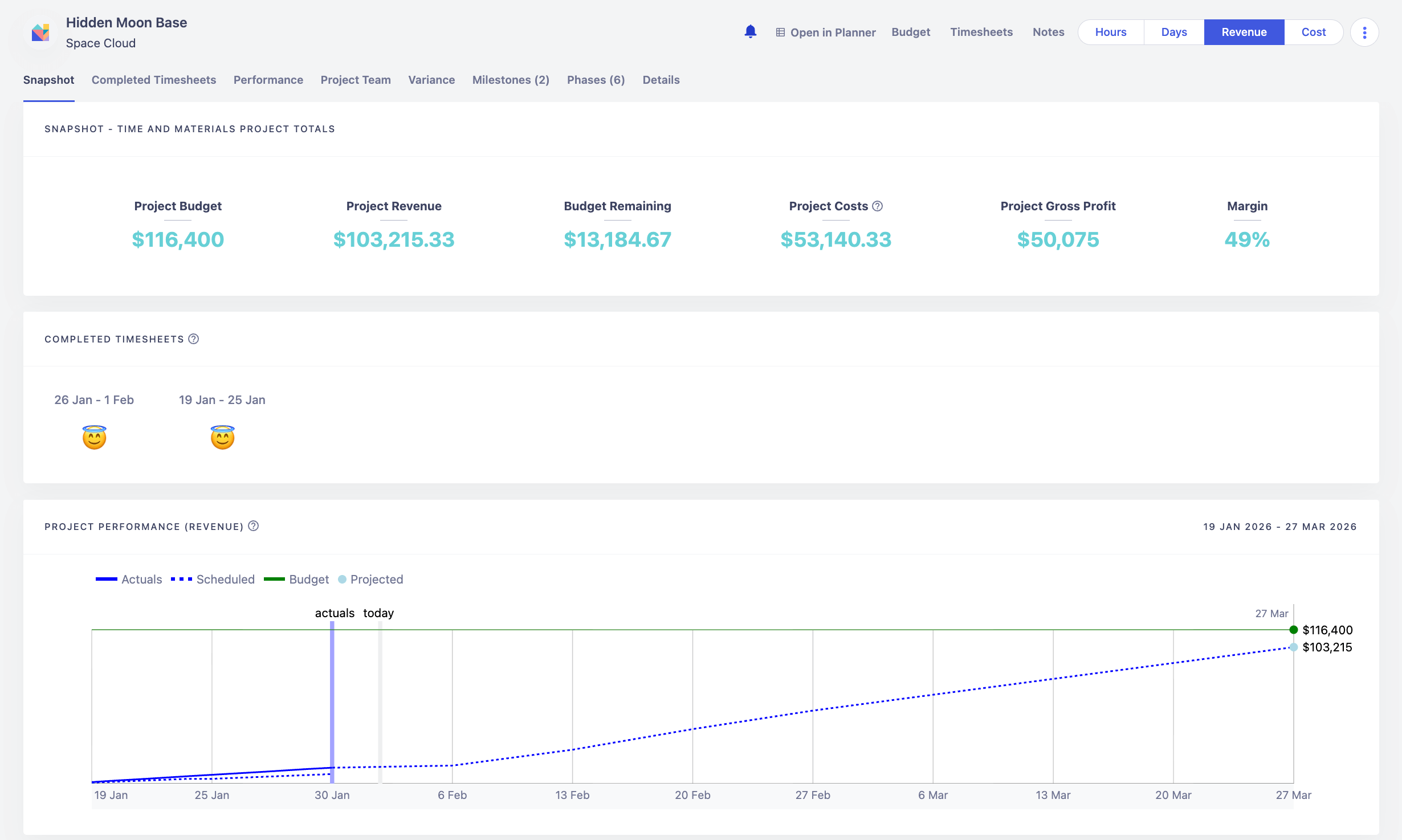
At the same time, compare planned versus actual resourcing costs across similar projects to surface more revenue patterns concerning overstaffing, under-scoping, and repeated mismatches.
Dig deeper: How to Calculate & Analyze Project Profitability ➡️
Overall, by putting in work into studying the impact of staffing on profit, you’ll start spotting patterns of revenue leakage. This allows you to staff intentionally so you’re maximizing profits.
Poor forecasting often results in missed deadlines, overworked teams, and under-delivered outcomes.
Thankfully, reviewing how close your projected plans are to what’s actually happening helps you accurately predict project progress, capacity, costs, and resource availability.
When you forecast based on real-time data, not guesswork, you can match people, projects, and timelines more precisely. The result? Fewer surprises, more predictable outcomes, and less last-minute scrambling.
The way to build accurate forecasts is to again, go back to your past projects. Use that historical delivery data to understand average time-to-complete by task, team, and role.
Next, factor in work that falls under non-billable time and is often forgotten. Make room for meetings, training, admin work, and internal projects so you aren’t just planning for productive hours.
Now, use all this real data to plan and track your projects.
Just make sure you regularly update your forecasts to reflect shifting scope, team availability, and incoming work.
Dig deeper: How to Do Resource Forecasting - A Complete Guide ➡️
You’ll want to do this in a centralized resource management tool to ensure everyone has access to this data and can use it to plan and keep projects on track.
Using a unified platform also automates the forecast updating work, so you aren’t manually updating upcoming projects and shifting scopes.
Remember, your resource plans and delivery timelines will improve as your forecasting improves.
Budget cuts never feel great. But they can prompt you to focus on the opportunities to improve.
So, as tough as it seems, lean into the moment to build smarter, leaner operations.
Ask the right questions about what’s working, what’s wasteful, and what’s worth investing in. And don’t forget, the right choices, prioritized at the right time, can help you and your team come out stronger on the other side of it.


