
AI adoption in resource management grew from 11% to 17% in a year. But with 65% of teams still "considering it," what's holding them back?

AI is the loudest conversation in almost every industry right now. Scroll through LinkedIn for five minutes and you'll find no shortage of hot takes about what it will transform next. Resource management is no exception.
It might surprise you to learn that, according to Runn's latest research, just 17% of resource management professionals are actively using AI to support their processes.
That's up from 11% in 2025 (a 55% jump year on year) but still a relatively small slice.
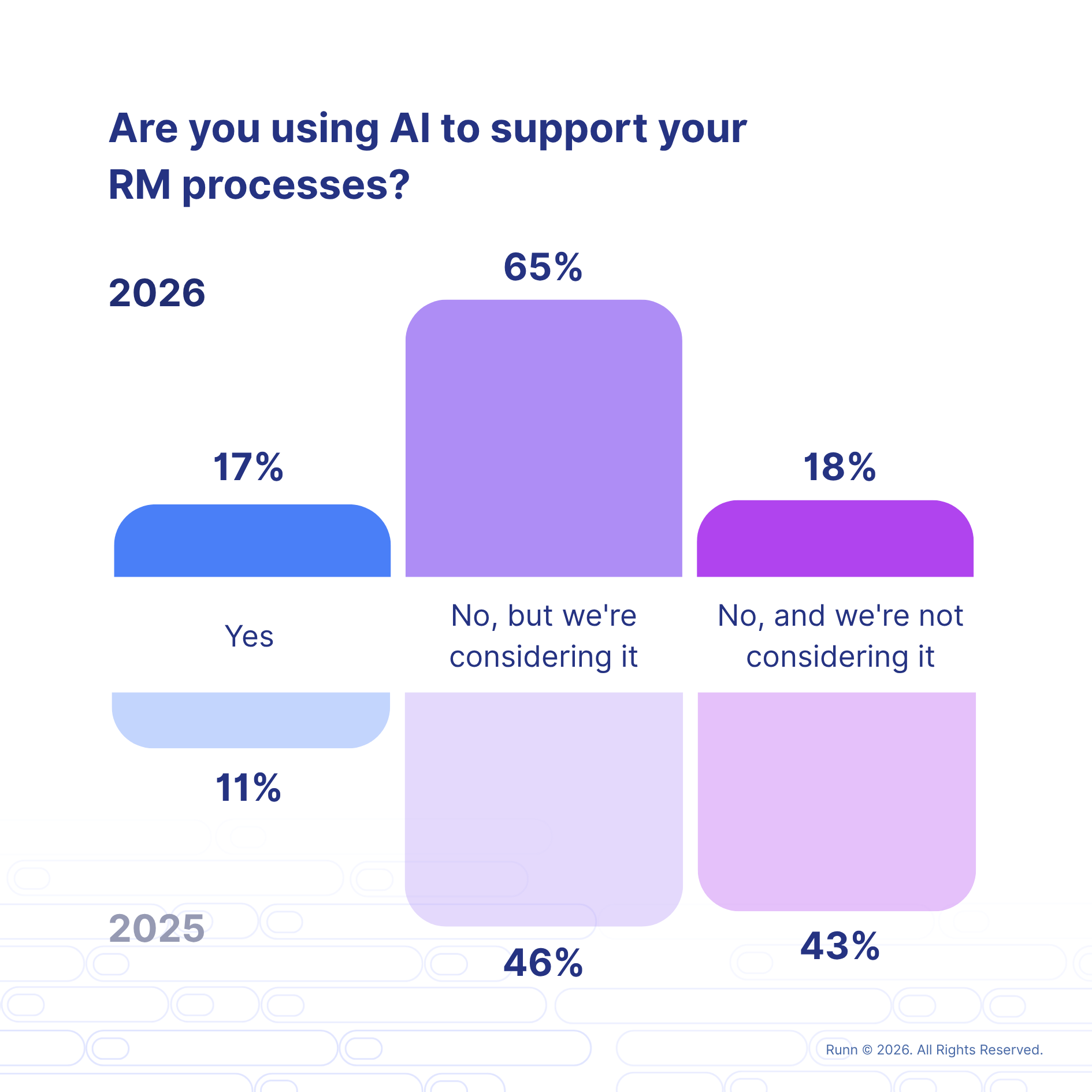
The bigger story, though, is that two-thirds (65%) say they're considering implementing AI tools. That's a significant shift from 2025, when 43% said they had no plans to explore AI at all. The appetite is clearly growing. Adoption, though, is another matter.
The hesitation isn't hard to understand when you look at the wider context of the report.
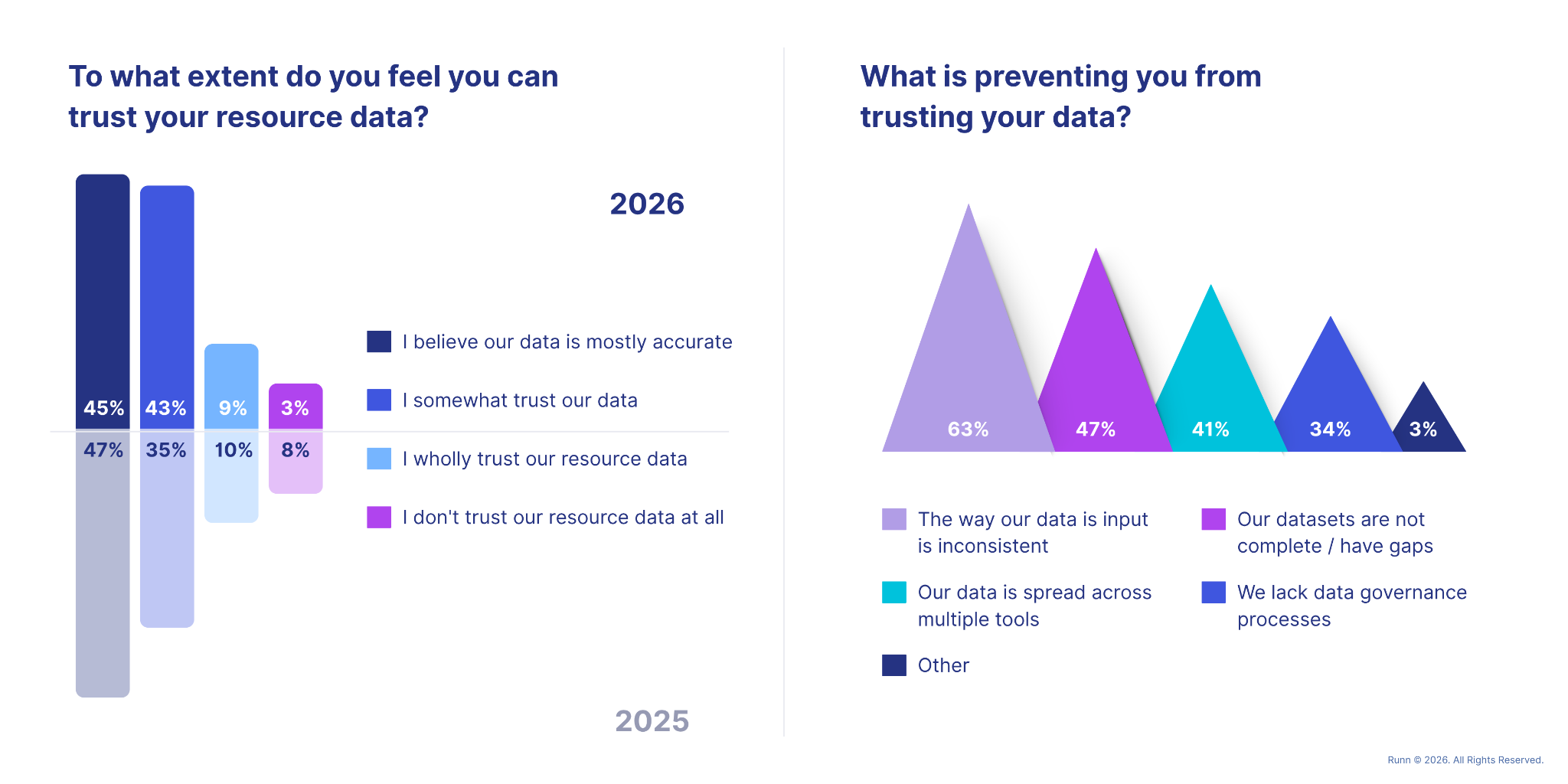
As most know, AI is only as good as what you feed it – and only 9% of respondents say they wholly trust their resource data.
This lack of trust is typically due to inconsistent inputs (63%) and incomplete datasets (47%). The issue is that without clean, connected data underneath it, AI risks amplifying existing inconsistencies rather than solving them.
One respondent put it plainly:
AI is only as good as the data inputs, otherwise it is garbage in, garbage out."
Until data foundations are stronger, many teams are sensibly cautious about introducing AI into their workflows.
Keep reading: Here's How to Prep Your Data for AI
When respondents were asked which AI capabilities they'd find most valuable, the answers were telling.
Automated forecasting (56%) and what-if analysis (55%) came out on top, followed by predictive risk alerts (45%) – all requests to help them see further ahead and make better decisions faster.
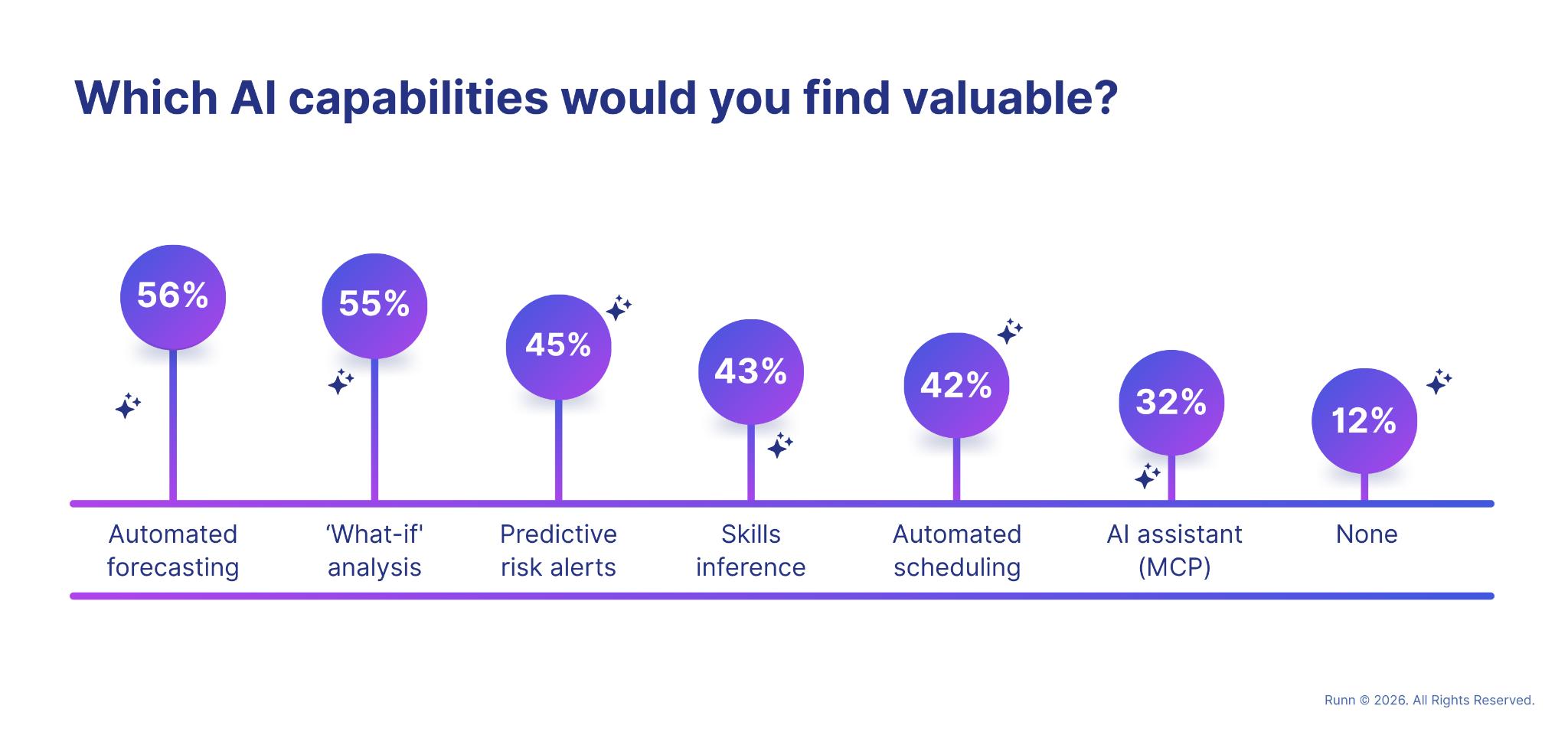
This points to a profession that understands AI's real potential isn’t as a replacement for human judgment, but as a tool that sharpens it.
Resource managers want to spend less time compiling data and more time acting on it – which makes sense, considering they’re spending almost a day a week on reporting.
The two-thirds interested in integrating AI tools have some work to do first – and it starts with prepping their data for AI. Here are some quick tips:
With the right systems in place to ensure data accuracy, resource managers can focus on what really matters: ensuring the right people are in the right place at the right time – not second-guessing whether their numbers can be trusted.
Looking for more resource management insights? Download our full report here:


.png)

