
.jpg)
⭐️ Tentative projects for forecasting future work
⭐️ Placeholders for flexible resource planning
⭐️ Variance reports for improved planning accuracy
✅ Replaced spreadsheet-based resource planning
✅ Improved forecasting of team capacity and future demand
✅ Faster resourcing decisions across multidisciplinary teams
Phiture helps app companies grow through services like ASO, performance marketing, CRM, retention, creative, and data analysis.
With more than 100 consultants, creatives, analysts and project managers across Europe, the UK, and the USA, the company coordinates work across multiple specialties and client teams.
Each team operates like its own mini company, with dedicated clients and specialists across multiple disciplines.
For Enric Ordeig, Principal Project Manager at Phiture, spreadsheets were no longer enough to coordinate work across ASO, CRM, paid media, and creative services. That meant managing workloads for around 20 consultants, creatives, analysts, and project managers across multiple specialties.
The business already used separate systems for project execution and task management, but lacked a reliable way to forecast future work across teams.
When evaluating options, Phiture avoided tools that tried to combine project management, task tracking, and resource planning into one platform.
"We chose Runn because it wasn't trying to be a project management tool,” says Ordeig. “We needed resource planning, and it delivers on that."
Phiture now models future work and plans ahead without needing to rely on disconnected spreadsheets.
"Our resource planning used to happen in spreadsheets, and I'd spend entire days manually updating them without getting an accurate picture. The difference now is just not comparable.”
At Phiture, work coordination starts before a contract is signed.
Once a new opportunity moves beyond the initial discovery phase, project managers estimate the hours and specialist roles required to deliver the service work and begin modelling it in Runn using tentative projects. The same approach applies to renewals and upsells with existing clients.
"We model upcoming work early in Runn so we can understand how new projects will affect our team’s capacity before anything is finalized."
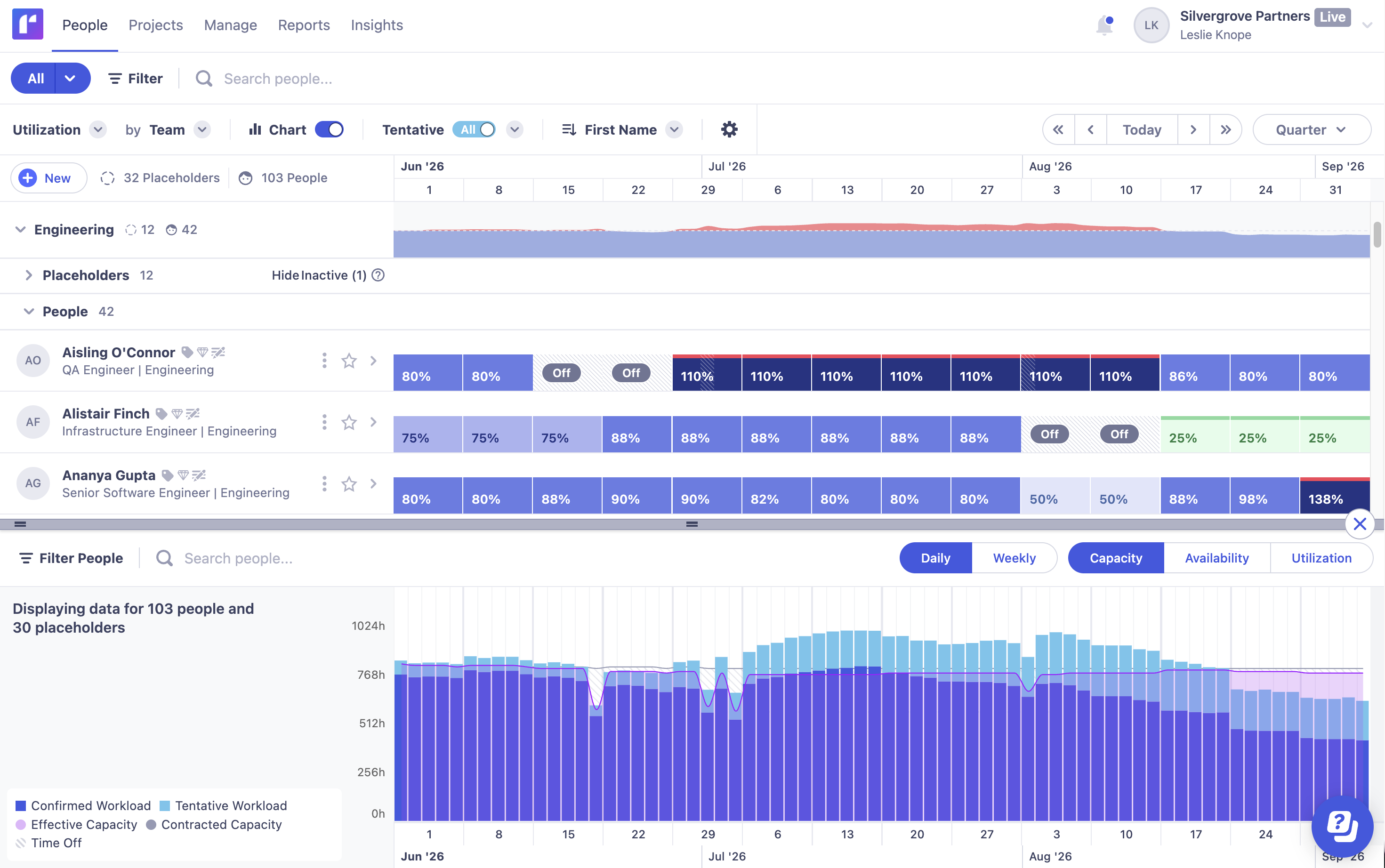
Because each pod operates semi-independently, teams must balance utilization, profitability, and service delivery across a wide mix of specialties.
To support that structure, they use Teams in Runn to mirror how work is organized internally, with every person and project assigned to a primary team.
Ordeig also uses placeholders to manage that uncertainty.
"Sometimes we know we'll need a role before we know exactly who will take it. Placeholders in Runn let us plan the work first and assign it to a specific person later."
With every pod’s workload visible in one place, project managers can quickly offer spare capacity to other teams or identify where additional support is needed.
"If I have 20 hours of a designer available, I'll offer that capacity to other teams. Or if I need support, I can quickly see who has availability across the company. That would have been impossible before Runn."
That same visibility also helps the sales team stay aligned during bi-weekly planning reviews by showing which services have available capacity.
"In Runn, it's critical for me to see my team’s availability so I can tell the Sales team which services to focus on to attract the right clients."
Rather than managing work at the task level, Phiture uses Runn as a high-level planning layer alongside its project management tools. This helps project managers forecast resourcing needs without adding operational complexity.
“Variance reporting in Runn helps us compare planned work against actual hours so we can make more informed planning decisions as projects evolve.”
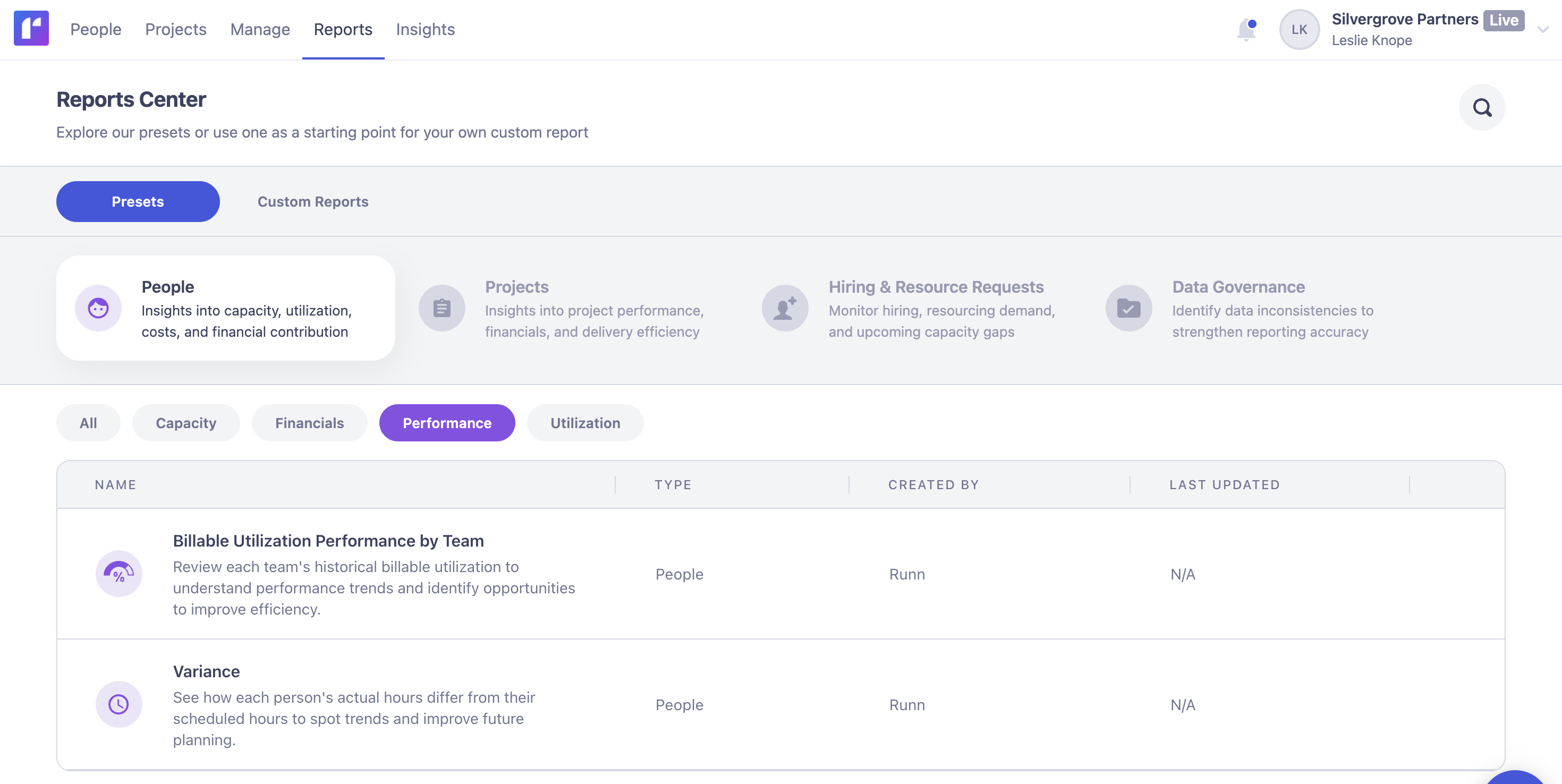
For day-to-day planning, Runn’s capacity and availability charts provide a clearer view of where additional support may be needed across services.
Time-off data is synced directly from the company’s HR system, so project managers do not need to manually cross-reference holidays or part-time schedules when adding people to projects. Instead, they just log into Runn.
“Automatically syncing time off into Runn solved a massive headache for us and saved us a huge amount of time.”
Ordeig also uses custom reporting workflows and API integrations to pull planning data into internal reports used across the business, creating a more reliable view of future resourcing needs.
For Ordeig, one of the biggest advantages of using Runn was being able to coordinate future work without adding unnecessary complexity to existing workflows.
Instead of spending hours manually updating spreadsheets, project managers now plan future work, adjust staffing needs early, and give support across teams from one place.
"Runn is extremely easy to use. That simplicity is one of the reasons it works so well for us."


.jpg)
.png)